+8618680445103
Metal Cans remain essential across beverage, food, aerosol, paint, and industrial packaging markets. They protect products from light, oxygen, moisture, and rough transport conditions. A 330-millilitre beverage can may look simple, yet its body thickness, lid design, internal coating, and double seam require precise engineering. This guide, “Top 10 Types of Metal Cans for Global Buyers,” examines those practical differences.
Market data shows why buyers still study metal packaging carefully. Smithers’ industry analysis, The Future of Metal Packaging and Coatings to 2028, identifies continued demand for recyclable, lightweight, and high-performance formats. The U.S. Environmental Protection Agency reported a 71.3% recycling rate for steel packaging and a 45.2% rate for aluminium beverage cans in 2022. These figures are useful, but they are not universal. Collection systems, reporting methods, and local infrastructure can change the result significantly.
Material selection affects more than price. Steel cans often provide strong stacking performance for food and industrial products. Aluminium cans offer low weight and efficient forming for beverages. Buyers must also verify food-contact compliance, coating compatibility, seam integrity, pallet efficiency, and regional recycling requirements. Small details matter. A damaged rim can stop a filling line. A mismatched lacquer can affect product taste or shelf life. No format is perfect. This overview therefore compares advantages, limitations, applications, and sourcing considerations, helping global purchasers make decisions based on evidence rather than attractive specifications alone.
Top 10 Types of Metal Cans for Global Buyers
How Metal Cans Are Classified by Material, Shape, and Function
Metal cans are easier to compare when buyers separate material, shape, and function. Common materials include tinplate steel, tin-free steel, aluminium, and stainless steel. Steel offers high stiffness and strong impact resistance. Aluminium provides low weight and excellent corrosion resistance. The International Aluminium Institute reports that recycled aluminium needs about 5% of the energy used for primary production. That difference matters during large-volume sourcing.
Shape also changes performance. Two-piece cans use a drawn body with an attached end. They suit beverages and some food products. Three-piece cans use a welded body and two separate ends. They support many heights and diameters. Round cans stack efficiently, while rectangular tins improve shelf presentation and space use. Tall, slim, shallow, and pail-shaped formats serve different filling lines. Classification is useful, but never perfectly clean.
Function creates another practical grouping. Food cans need reliable seam integrity and internal protection. Beverage cans prioritize pressure control, light weight, and fast filling. Paint, chemical, and household cans often require stronger lids and wider openings. Aerosol cans need carefully verified pressure performance and compatible coatings. A 2024 World Steel Association report recorded about 1.89 billion tonnes of crude steel production in 2023, showing the material’s enormous industrial base. Yet buyers should not confuse supply scale with suitability. A cheaper can may fail after transport vibration, condensation, or repeated opening. Specification sheets help, but physical sampling still deserves attention.
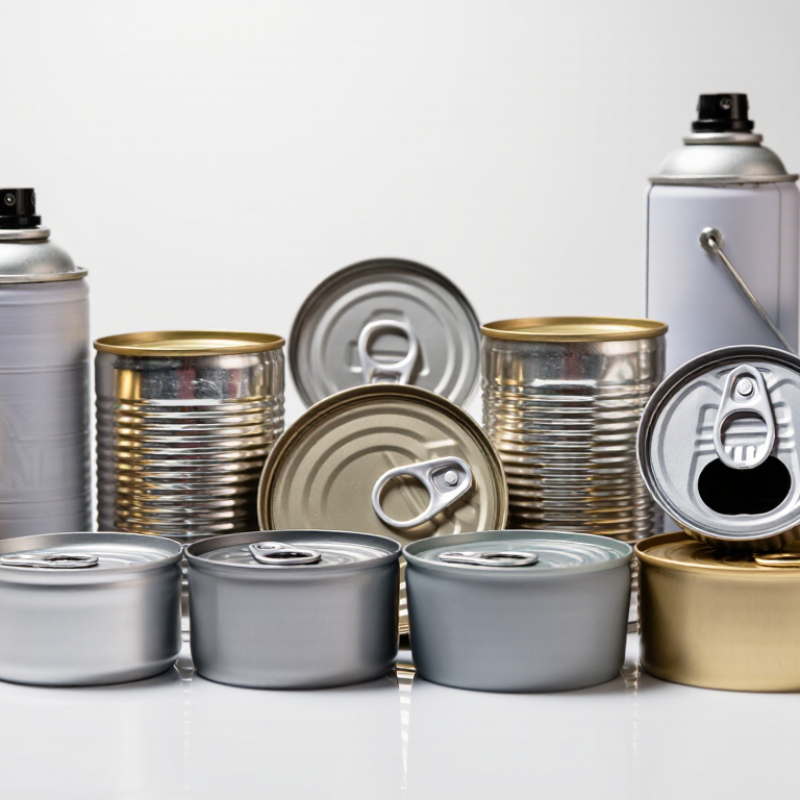
Global packaging markets rely on ten practical metal can types.
Two-piece beverage cans suit carbonated drinks and require reliable pressure resistance.
Three-piece food cans support soups, vegetables, and processed foods.
Easy-open-end cans improve convenience, especially for busy households.
General-line cans package coffee, powders, and household materials.
Paint cans use strong bodies and tight lids to reduce leakage during storage.
Metal pails handle larger volumes, often with wire handles and reinforced rims.
Aerosol cans require controlled internal pressure and carefully tested valves.
Screw-top tins protect snacks, spices, and specialty foods from moisture.
Decorative tin cans add shelf appeal while protecting small gifts or seasonal goods.
Metal tubes work well for creams, gels, and other controlled-dose products.
Each type reflects a different balance of strength, closure performance, filling speed, and transport efficiency.
Tips: Match the can with the product’s acidity, weight, filling temperature, and expected shelf life. Check coating compatibility before approving production. A bright finish may look attractive, but it can hide scratching or weak adhesion. Regional recycling systems also matter. Local standards can change. Do not assume one specification fits every market. In real packaging reviews, small details often cause delays, especially lid fit and pallet stability. Mistakes still happen, so pilot testing remains valuable.
Top 10 Types of Metal Cans for Global Buyers
Metal cans serve different markets, and their structure must match the product inside. Food cans commonly hold vegetables, sauces, seafood, and pet food. Beverage cans suit carbonated drinks, juice, and energy beverages. Their light weight supports efficient shipping, but seam quality remains critical.
Aerosol cans are used for household sprays, personal-care products, and technical cleaners. Paint cans protect coatings during storage and transport. Coffee tins, cookie tins, and confectionery tins support freshness and gift packaging. Screw-top tins work well for tea, spices, balms, and small hardware. Metal pails handle lubricants, coatings, and construction materials. Decorative tins add visual value to seasonal products. Easy-open cans improve convenience for ready-to-eat foods. Each type needs suitable steel or aluminum, internal coating, closure design, and corrosion testing.
Tips: Confirm filling temperature, product acidity, pressure, and shelf-life targets before ordering. Ask for sample cans and seam reports. Check dimensions against filling lines and shipping cartons. Export requirements differ by market, so verify food-contact rules, labeling duties, recycling marks, and dangerous-goods classifications where applicable. Small details matter. A visually attractive tin may still fail after humid storage. I have found that buyers sometimes focus on unit price too early. That can hide coating limits, tooling costs, or higher damage rates. A reliable supplier should provide material data, inspection records, and practical packing advice.
Key applications and representative nominal capacities by product category
The chart compares widely used metal can formats by representative nominal capacity. Beverage cans commonly range from 250–500 mL, while food, aerosol, and industrial cans use larger or application-specific formats. Actual fill volumes and dimensions may vary by market, material, closure, and regulatory requirements.
For global buyers, comparing metal cans starts with the filled product, not the empty container. Common options include two-piece aluminum cans, three-piece tinplate cans, food cans, paint cans, and aerosol cans. Check diameter, height, fill volume, neck design, and pallet quantity together. A taller can may reduce shelf space but improve pallet utilization. Small differences matter during transport.
Performance depends on wall thickness, alloy or steel grade, internal coating, seam strength, and resistance to pressure or corrosion. Request data from ISO or ASTM-based tests, including drop, leakage, stacking, and thermal exposure results. The International Aluminium Institute reports that recycled aluminum requires about 5% of the energy used for primary production. Metal Packaging Europe and European Aluminium reported a 76% beverage-can recycling rate in Europe in 2022. These figures support lifecycle decisions, but local recovery systems still vary.
Cost comparison should include tooling, minimum order quantity, printing, closures, freight, duties, inspection, and rejected units. A lower unit price can become expensive after long-distance shipping or poor line compatibility. I would not trust a spreadsheet using price alone. Ask suppliers for seam samples and production-line trials. This is where comparisons become untidy. A thicker can may protect better, yet add material and freight cost. Experienced buyers should calculate total landed cost per usable can, then review the assumptions before signing.
Top 10 Types of Metal Cans for Global Buyers
Global buyers should compare more than price when selecting metal cans. Common formats include tinplate food cans, aluminum beverage cans, aerosol cans, paint cans, pails, tins, easy-open cans, drawn-and-wall-ironed cans, decorative tins, and specialty containers. Each format requires different testing. Check wall thickness, coating adhesion, seam strength, corrosion resistance, and dimensional tolerance. A low unit price can become expensive after leakage, dents, or rejected shipments.
Standards must match the destination market and product category. Ask suppliers for ISO 9001 quality records, ISO 14001 environmental credentials, migration testing, and batch traceability. For food contact packaging, request material declarations and coating compliance documents. Metal Packaging Europe reported an 80.5% recycling rate for metal packaging in Europe in 2022. The International Aluminium Institute states that recycled aluminum uses about 95% less energy than primary aluminum. These figures support recycled-content sourcing, but they do not prove every supplier is sustainable. Evidence matters.
Tips: Request three recent production samples. Measure seams with a simple gauge. Review the supplier’s corrective-action history, not only its certificates. Confirm recycled content by mass-balance or chain-of-custody records. Freight distance also matters. A lighter can may reduce transport emissions, yet fail during stacking. I have seen buyers overlook pallet compression tests. That mistake is avoidable. Local assumptions can still be wrong.