• Facebook
  • twitter
  • Instagram
  • YouTube
Free Standard Samples can be provided for you to check the quality.
We respect your confidentiality and all information is protected.
Leave Your Message
*Name Cannot be empty!
* Enter product details such as size, color,materials etc. and other specific requirements to receive an accurate quote. Cannot be empty

10 Tips to Choose the Best Tin Containers for Your Business

Choosing the right Tin Containers can influence product protection, presentation, storage, and customer trust. A container is not merely a metal box. It may face humidity, repeated handling, shipping pressure, and changing temperatures before reaching a customer’s hands. The best choice depends on your product, sales channel, budget, and brand promise. A small sample can reveal more than a polished catalog image. Check its seams, lid fit, interior coating, surface finish, and resistance to dents. These details matter.

Reliable suppliers should provide clear material information, consistent dimensions, and suitable compliance documentation for the intended application. If the container will touch food, confirm that its lining and printing materials are appropriate for food contact. Do not rely on vague claims. Request test reports, production samples, and references when possible. Experienced buyers also compare minimum order quantities, tooling costs, lead times, and replacement policies. A beautiful tin with an unreliable supply chain can become an expensive mistake. We have all seen packaging decisions that looked efficient on paper but created delays later. That possibility deserves attention.

This guide explores ten practical tips for selecting Tin Containers with greater confidence. It considers durability, usability, customization, safety, sustainability, and total cost. Some priorities may conflict. A thicker tin can feel premium, yet increase shipping weight. A complex shape may attract attention, yet complicate stacking. Careful evaluation helps your packaging perform beyond the first impression. Expect to revise your shortlist. That is often part of making a sound business decision.
10 Tips to Choose the Best Tin Containers for Your Business

Understanding Tin Container Types and Their Common Business Uses

Understanding Tin Container Types and Their Common Business Uses

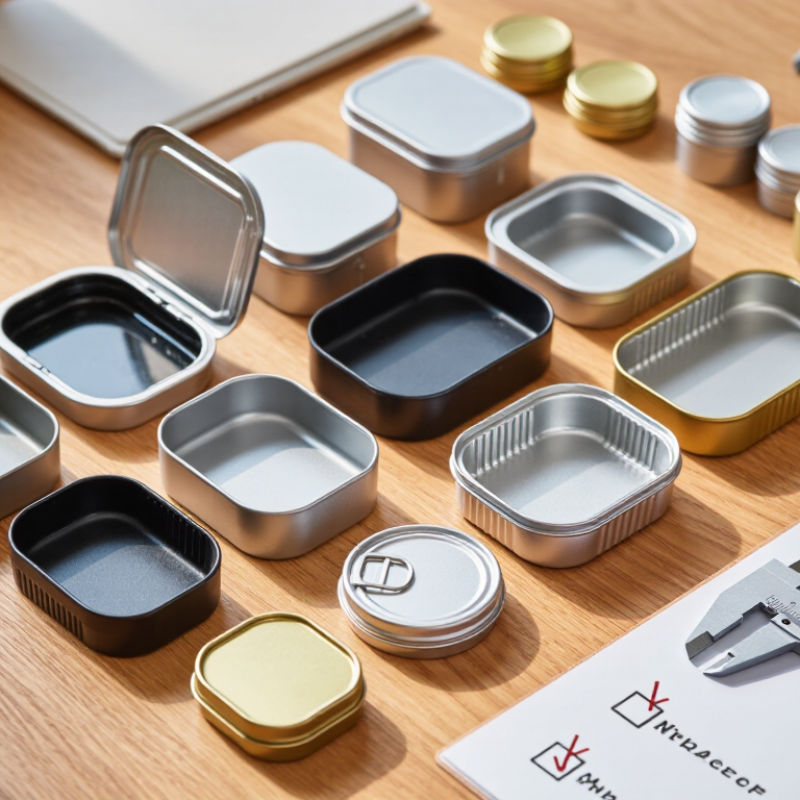
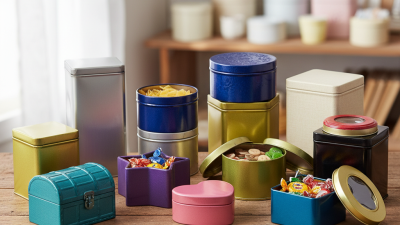
Tin containers differ in shape, closure, strength, and interior finish. Slip-lid tins work well for tea, sweets, candles, and small gift sets. Hinged tins offer faster access for mints, sewing items, stationery, and travel-sized products. Screw-top tins provide a tighter closure for balms, powders, and other dry goods. Deep tins can hold larger items, but they may increase shipping costs.

Tip 1: Match the container to the product’s daily handling. A retail item opened often needs a smooth, secure lid. Check the hinge, rim, and closing pressure before ordering in bulk. I once focused too much on appearance and overlooked a lid that felt loose. That mistake could damage customer trust.

Tin containers with food-safe coatings are suitable for products that contact the metal directly. Moisture-sensitive goods may need an inner liner or sealed pouch. For cosmetics, inspect the coating for compatibility with oils and fragrances.

Industrial users often choose stronger tins for screws, samples, craft supplies, or maintenance parts. Measure the actual product, including labels and protective wrapping.

Tip 2: Test stacking and transport. Tip 3: Leave room for labels. A practical sample review should include opening, closing, cleaning, and drop testing. Small details matter. A beautiful tin can still become inconvenient when shelves are narrow or customers have limited grip strength. Supplier specifications should be verified with samples, material details, and production records before committing to a large order.

Defining Your Product’s Size, Capacity, and Storage Requirements

Choosing the best tin container starts with your product’s actual dimensions, not a supplier’s standard chart. Measure its length, width, height, and shape after packaging. Include labels, liners, and protective inserts. A few extra millimeters can prevent crushed edges or difficult removal.

Tip: Leave practical headspace. Loose products may need room for movement, while delicate items require cushioning. Test the container with a full sample, not an empty prototype. I once underestimated the space needed for folded materials; the lid closed, but the contents became distorted. That small mistake changed the final size.

Capacity also depends on storage conditions. Consider whether containers will sit on shelves, inside cartons, or in temperature-sensitive areas. Measure warehouse shelves and shipping boxes before selecting a capacity. A tall container may hold more, yet waste vertical space when stacked. Check lid security, internal clearance, and ease of opening during repeated use. Small details matter.

Tip: Run a realistic storage trial for at least several days. Fill containers to their normal level, stack them, and inspect scratches, dents, and shifting contents. Record the results. This evidence is more reliable than guessing from volume alone. If product sizes vary between batches, choose a design with modest flexibility rather than forcing every item into a perfect fit.

10 Tips to Choose the Best Tin Containers for Your Business - Defining Your Product’s Size, Capacity, and Storage Requirements
No. Selection Dimension Recommended Approach Practical Data or Example What to Verify Before Ordering
1 Measure the Product Measure the product’s length, width, and height after preparation, including liners, labels, protective wrapping, or internal pouches. A product measuring 90 × 60 × 25 mm may require an internal container space of at least 95 × 65 × 30 mm. Confirm the internal dimensions, not only the external dimensions.
2 Define Usable Capacity Choose capacity based on the product’s actual fill volume and leave enough headspace for easy opening and safe handling. For a 100 mL product, a container with approximately 110–120 mL of usable capacity can provide practical filling clearance. Ask whether the stated volume is nominal capacity or usable fill capacity.
3 Allow for Headspace Leave room for settling, expansion, product movement, and removal without damaging the contents. Dry goods such as tea, confectionery, or bath salts may need 5–15% additional internal volume, depending on packing density. Test the container with the real product and the final filling process.
4 Match the Container Shape Select round, rectangular, square, or irregular shapes according to product geometry and available shelf space. Rectangular tins generally use shelf and carton space more efficiently than round tins when products are arranged in rows. Compare shelf footprint, stacking behavior, and unused space inside shipping cartons.
5 Check Product Protection Consider resistance to light, moisture, impact, puncture, and corrosion based on the product’s sensitivity. A tin with a tight-fitting lid can provide a durable barrier for many dry products, while moisture-sensitive goods may also need an inner seal or pouch. Evaluate the complete package system rather than the metal container alone.
6 Plan Storage Conditions Review temperature, humidity, sunlight exposure, and warehouse handling conditions throughout the storage period. Store filled tins in a dry, ventilated area and avoid prolonged exposure to condensation or direct sunlight. Confirm that the coating, closure, and product are compatible with expected storage conditions.
7 Calculate Pack-Out Efficiency Determine how many filled containers fit into a shipping carton or pallet while maintaining protection and manageable weight. A carton measuring 400 × 300 × 200 mm may accommodate different quantities depending on container orientation, clearances, and protective dividers. Create a carton-packing layout before finalizing container dimensions.
8 Consider Closure Performance Choose a friction-fit lid, hinged lid, slip lid, or other closure according to opening frequency and security requirements. A hinged lid is convenient for repeated use, while a tight slip lid can be suitable for products that require a simple resealable package. Test opening force, lid alignment, resealing, and accidental opening during transport.
9 Review Handling and Weight Balance container wall thickness and durability with the total packed weight and ease of carrying. A larger tin filled with dense products may become heavy even when the empty container feels lightweight, affecting shipping and retail handling. Weigh a filled sample and compare it with courier, shelf, and customer handling limits.
10 Validate with Samples Run physical tests using the actual product, label, closure, shipping carton, and storage environment before placing a production order. A useful validation cycle includes fill testing, drop testing, stacking checks, humidity observation, and repeated lid-opening tests. Approve the final size only after the filled package passes functional and logistics testing.

Evaluating Material Quality, Durability, and Protective Features

Material quality determines whether a tin container protects products or creates new problems. Check the steel thickness, tin coating, seam accuracy, and interior lacquer. A food-contact coating should resist acids, oils, and moisture. Ask suppliers for migration test results and batch inspection records. ISO 2859-1 sampling methods can support consistent quality checks. Still, paperwork alone is not enough. Inspect the rim, lid fit, and printed surface under bright light.

Tip: Test real samples before ordering. Fill them with your product, store them in humid conditions, and inspect them after several weeks. This practical step often reveals odor transfer, rust spots, or loose lids. According to Metal Packaging Europe, steel packaging recycling reached 84% in Europe in 2022. Durable steel can support circular use, but coatings and mixed materials may complicate recycling.

Durability depends on more than metal thickness. Drop tests, compression tests, and repeated opening tests should match your shipping conditions. ASTM D5276 can guide free-fall drop testing, while ASTM D642 supports container compression evaluation. Protective features also matter. Consider airtight seals, tamper-evident closures, internal cushioning, and corrosion-resistant coatings. Tip: Test the weakest point first. In my experience, the lid edge often fails before the container body. That result may feel inconvenient, but it prevents expensive redesigns later. Evaluate stacking, temperature changes, abrasion, and vibration before approving production.

Comparing Closures, Customization Options, and Brand Presentation

Choosing a tin container starts with its closure, not its artwork. A slip lid suits dry goods and quick access. A hinged lid feels secure and supports repeated use. For moisture-sensitive products, test the seal with a liner or gasket. Check opening force, stack stability, and drop resistance before ordering large quantities. Small production tests reveal problems that samples can hide.

Tip: Match the closure to customer behavior. A lid that is too tight frustrates users. Too loose, and the package feels cheap. In my packaging trials, a clean snap often communicates quality better than heavy decoration. Still, closure performance can vary with temperature and filling speed. Recheck both.

Customization should improve recognition without weakening function. Embossed logos add tactile value, while lithographic printing creates precise color blocks. Matte finishes hide fingerprints; gloss finishes attract attention under retail lighting. McKinsey’s 2023 global packaging research reports that 60–70% of consumers may pay more for sustainable packaging, but appearance still shapes first impressions. Use recyclable tin, restrained inks, and clear disposal guidance. The 2023 Two Sides global survey also found strong consumer concern about packaging recyclability, reinforcing the need for honest claims.

Tip: View the container at arm’s length. Can shoppers identify the product quickly? Test three designs on a crowded shelf, then measure recall. Brand presentation is more than a logo; it includes lid sound, hand feel, label alignment, and reuse potential. Perfect consistency is difficult. That is worth examining.

10 Tips to Choose the Best Tin Containers for Your Business

Comparing closures, customization options, and brand presentation. Scores use a practical 1–5 selection scale, where 5 represents the strongest fit for the stated criterion.

Hinged tins are convenient for repeat use, slip-lid tins provide simple access and flexible decoration, screw-top tins offer a secure closure, and friction-fit tins balance practicality with cost-effective packaging.

Assessing Supplier Reliability, Costs, and Regulatory Compliance

Choosing tin containers requires more than comparing unit prices. Confirm the metal specification, coating, wall thickness, closure fit, and production tolerance. Tin usually means tin-plated steel, so request mill certificates and coating details. Ask for evidence. The ISO Survey 2022 recorded more than 1.2 million ISO 9001 certificates worldwide, but certification alone cannot prove consistent container quality. Review audit dates, corrective-action records, laboratory reports, and sample batches. A small pilot order can expose denting, odor transfer, or weak seams before full production.

Supplier reliability also affects hidden costs. Compare minimum order quantities, tooling charges, inspection fees, freight terms, and replacement policies. The World Bank’s 2023 Logistics Performance Index assessed 139 economies, showing how customs, tracking, and delivery reliability can influence landed costs. Request a written lead-time range, not one optimistic date. Keep backup capacity when delays could stop sales. I would not rely on a polished presentation alone.

Compliance must match the container’s intended use and destination. For food contact, verify applicable FDA requirements in the United States or Regulation (EC) No. 1935/2004 in the European Union. Request declarations of compliance, migration testing, ink and coating specifications, and traceability records. Eurostat reported 188.7 kilograms of packaging waste per EU resident in 2021, reinforcing the value of documented material choices and recyclability claims. Avoid vague “food-grade” language. It sounds reassuring, yet it may conceal missing test conditions, outdated documents, or an unsuitable lining.