What is the Purpose of Empty Cans in Recycling?
Empty cans play a vital role in the recycling ecosystem. According to the Aluminum Association, recycling one aluminum can saves enough energy to power a television for three hours. This highlights the necessity of empty cans in conservation efforts. Every year, millions of cans end up in landfills, reducing the potential for energy savings and raw material conservation.
The recycling process for empty cans involves several stages. Once collected, they are cleaned, crushed, and melted. This transformation makes it possible to create new products with less energy than using new materials. However, some still question the effectiveness of recycling. Many cans are improperly disposed of, and as a result, they contribute to environmental pollution.
There’s a paradox here: while empty cans are recyclable, they often end up being discarded. According to the EPA, only about 50% of aluminum cans are recycled each year. This indicates room for improvement in public awareness and participation. Encouraging proper recycling habits can lead to increased recovery rates, benefiting the environment significantly. Understanding the role of empty cans could reshape our approach towards sustainability and resource management.
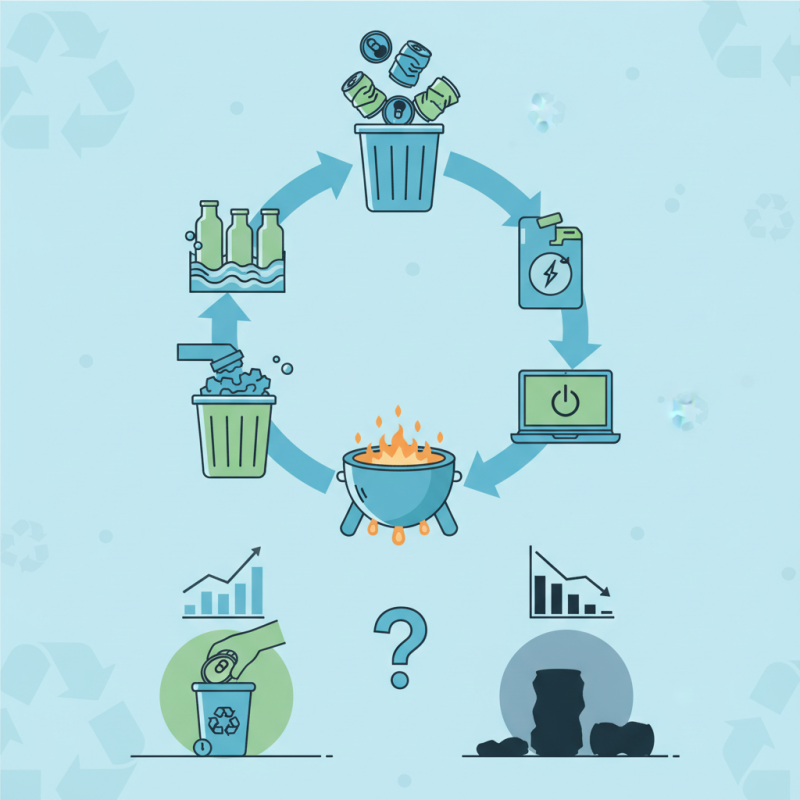
The Role of Empty Cans in the Recycling Process
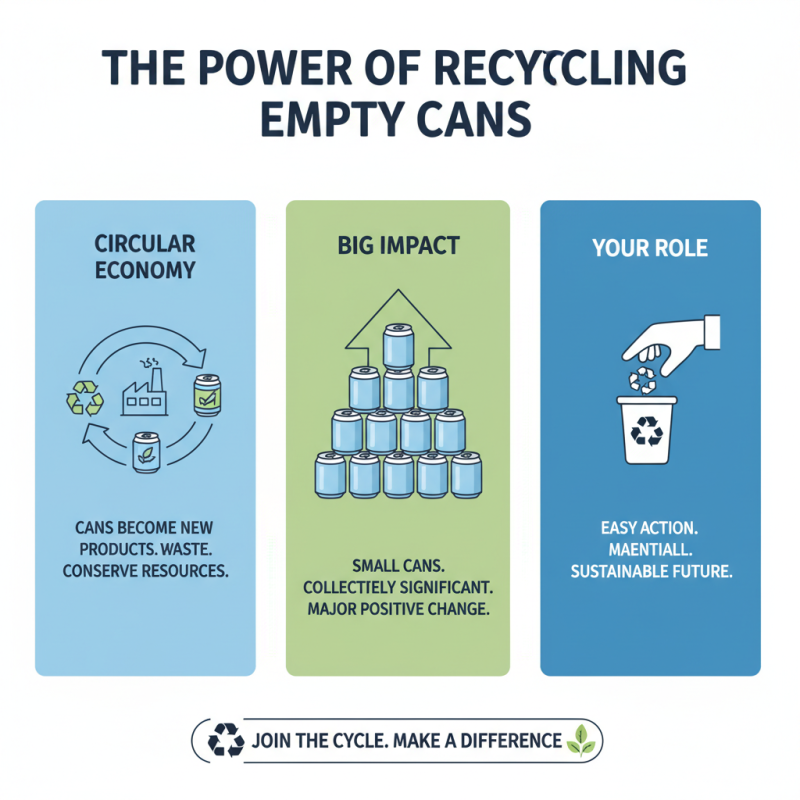
Empty cans play a crucial role in the recycling process. They provide essential materials for creating new products. When you recycle an empty can, you contribute to a circular economy. This helps reduce waste and conserve resources. Each can might seem insignificant, yet they accumulate to make a big impact.
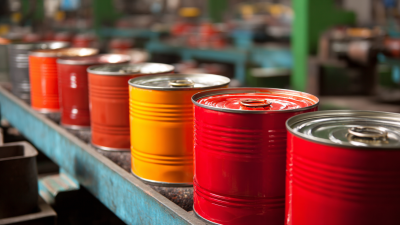
The journey of an empty can begins at your recycling bin. Cans are collected and sent to a recycling facility. Here, they undergo sorting. Contaminants are removed, and the cans are crushed. This process saves space and makes transportation efficient. The crushed cans are then melted down. This can transform them into new aluminum products.
However, sometimes, the recycling process is not perfect. Not all empty cans reach recycling facilities. Some end up in landfills, causing pollution. Education on proper recycling habits is vital. We need to be more mindful of how we dispose of cans. When we fail to recycle properly, we lose valuable resources. Reflecting on our habits can lead to better decisions in waste management.
Environmental Benefits of Recycling Empty Cans
Recycling empty cans offers significant environmental benefits. When cans are recycled, they reduce the need for raw materials. This process saves energy. For example, recycling aluminum cans consumes 95% less energy than creating new ones from bauxite ore. Fewer resources used leads to a smaller carbon footprint.
Moreover, the recycling of empty cans contributes to waste reduction. Landfills are overflowing with waste, and cans take years to decompose. By recycling, we can divert these materials from landfills. This effort can help prevent soil and water contamination. Unfortunately, many cans still end up in the trash despite recycling programs. Awareness needs to improve.
Communities can benefit from increased recycling rates. Schools and local organizations often organize recycling drives. Engaging the public in these initiatives encourages responsible behavior. Yet, there remains a gap in participation. People need motivation to recycle more consistently. Incentives could spark interest and participation. Every small effort counts toward a cleaner planet.
Steps for Properly Recycling Empty Cans
Recycling empty cans is crucial for protecting our environment. Properly recycling them can help reduce waste and save energy. Here’s how you can do it right.
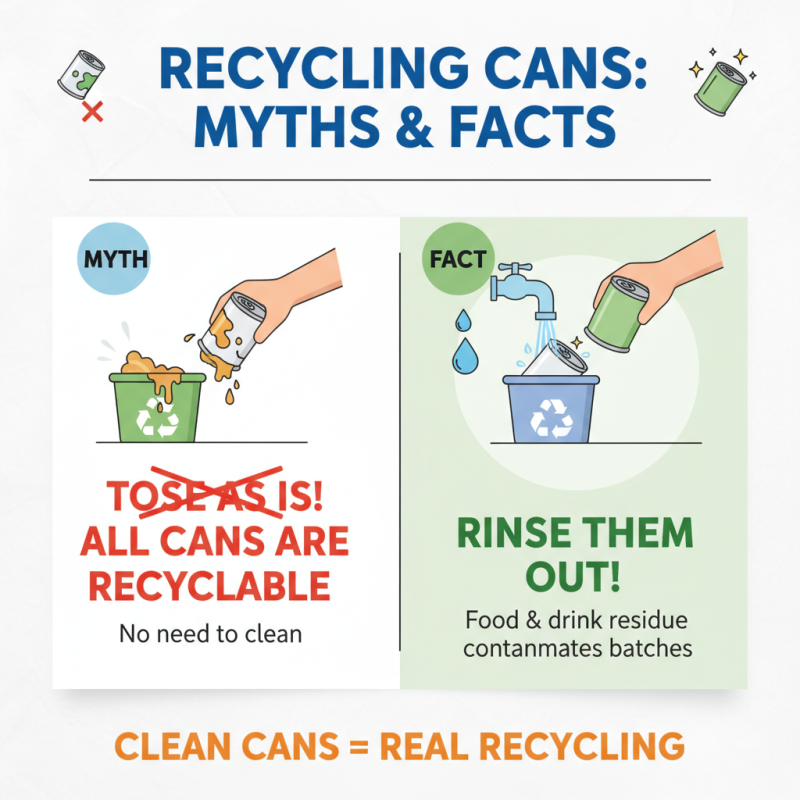
Start by rinsing your empty cans. A quick rinse removes residues that can contaminate recyclables. After that, flatten the cans. It saves space in recycling bins and makes transportation easier. Many people forget this step, which can lead to inefficiency in recycling processes.
Check your local guidelines. Not all regions accept cans in the same way. This small effort helps ensure the cans are processed correctly.
Be mindful of your behavior. Avoid tossing cans into regular trash. Mixed materials can complicate recycling efforts. If you're unsure, collect the cans and research your local recycling program. Building awareness around proper recycling can be a gradual and sometimes frustrating process. Every effort counts, no matter how small.
Innovative Uses for Recycled Aluminum Cans
Recycling aluminum cans serves many purposes beyond just reducing waste. Many people see empty cans as trash, but they hold potential. These cans can transform into innovative products, showcasing creativity and sustainability.
One fascinating use for recycled aluminum is in the production of new items like jewelry and decor. Artists and craftsmen take these cans and create unique, eye-catching pieces. For instance, can pull-tabs can form bracelets or woven pieces. They often incorporate vibrant designs, reflecting the original can art. This process gives a second life to what many consider disposable.
Beyond art, aluminum can recycling helps in manufacturing tools and construction materials. Some companies repurpose these materials into building components. This practice cuts down on the need for raw material extraction, which is essential for environmental preservation. Recycling empty cans not only reduces landfill waste but challenges us to think differently about resources. We must ask ourselves: Are we truly maximizing the potential of what we throw away?



 +8618680445103